
Can IVDR Be Your Global Regulatory Compass for Market Entry?
Can IVDR Be Your Global Regulatory Compass for Market Entry?
Regulatory Affairs In Vitro Diagnostics EU IVDR
Wednesday, 04 June 2025

Pieter Bogaert, Senior Consultant IVD - Regulatory Affairs at QbD Group

 Share
 \
\
X (Twitter)
 \
\
LinkedIn
 \
\
WhatsApp
 \
\
Copy link
 \
\
Mail
Learn how IVDR aligns with FDA standards, where they diverge, and how to use your IVDR compliance as a springboard for global IVD market access.
Can IVDR Guide Global Market Access for IVDs? | QbD Group
6:23
The In Vitro Diagnostic Regulation (IVDR) in the EU is widely considered one of the most rigorous regulatory frameworks in the world for IVDs. With its emphasis on scientific validity, analytical performance, clinical data, and post-market surveillance, many manufacturers ask:
Can IVDR compliance help us enter other global markets, like the United States?
In this blog post, we’ll explore that question step by step:
- How IVDR and FDA overlap in standards and expectations
- Where interpretations and regulatory logic differ
- What this means for your approval strategy and clinical evidence
- And how IVDR can support—but not replace—your global regulatory planning
Shared Foundations: Standards That Cross Borders
To meet the General Safety and Performance Requirements (GSPR) under IVDR, manufacturers often use international consensus standards. Many of these are also recognized by the FDA.
For example, both regulators accept:
- ISO 13485 for quality management
- ISO 14971 for risk management
- IEC 62304 for medical device software
- IEC 62366-1 for usability engineering
While IVDR does not formally reference them, notified bodies commonly accept practical, test-specific guidance such as:
- CLSI documents for method validation
- ASTM and ISTA protocols for stability and transport packaging
➡️ So far, so good: IVDR and FDA share a technical foundation built on globally respected standards.
Shared Standards, Different Interpretations
But here’s where things get more complex. While regulators may use or accept the same standards, their interpretations and expectations differ.
For example:
- Both IVDR and FDA require data on stability and performance—but may evaluate surrogate samples or packaging studies differently
- Both recognize IEC 62304—but diverge when it comes to cybersecurity documentation
- Even if your documentation aligns with IVDR, the FDA’s review staff may raise additional questions or require different data structures during the premarket submission process.
➡️ The takeaway? Don’t assume that ticking a box for IVDR means automatic FDA alignment.
Different Regulatory Models, Different Strategies
Beyond technical standards, how regulators assess devices is fundamentally different.
| Aspect | IVDR (EU) | FDA (US) |
|---|---|---|
| Evaluation Model | Always absolute benefit-risk assessment | If 510(k), Comparison to predicate device |
| Approval Scope | Always individual device | System-level approval possible |
| Pre-submission Dialogue | Limited (Notified Bodies can't advise) | Structured discussions (e.g., Q-Sub) |
These differences affect how you should plan your evidence generation, how you position your product, and even what goes into your documentation.
➡️ Even if your product is IVDR-compliant, you may need to adjust your development and submission strategy for FDA.
Clinical Evidence: IVDR Differs from FDA
One of the most important distinctions lies in the clinical evidence framework: IVDR explicitly requires scientific validity and state-of-the-art justification, while FDA’s expectations may differ depending on the submission pathway — and can still be highly stringent.
| Requirement | IVDR | FDA |
|---|---|---|
| Scientific Validity | ✅ Required | ❌ Not required |
| State of the Art | ✅ Required | ❌ Not required |
| Analytical Performance | ✅ Required | ✅ Required |
| Clinical Performance | ✅ Required | 🟡 Depends on pathway |
| Use of Foreign Data | ✅ Accepted (with justification) | 🔺 Local studies highly recommended |
| Acceptance of ISO 20916 | ✅ Harmonized standard | ❌ Not recognised |
➡️ If your clinical study is designed to meet IVDR requirements, it may also fulfill FDA requirements — but you’ll still need to ensure it’s formatted, conducted, and justified correctly for each region.
Regulator Involvement: Steering the Ship
Another major difference is how much support you can expect during the regulatory process.
- In the EU, Notified Bodies are barred from giving consultative feedback
- In the US, the FDA actively supports pre-submission dialogue through programs like the Q-Sub
This means the FDA can provide input on your evidence generation strategy and even device design decisions, while in the EU, you’re expected to make those choices independently and justify them during review.
➡️ Strategic implication: If you're designing your global approach around IVDR, build in opportunities for early engagement with FDA to avoid mismatches later.
Technical Documentation: Similar Content, Different Formats
Yes, there’s overlap between the documents required by IVDR and those needed for FDA—but they aren’t interchangeable.
Documents useful for both:
- Design and development evidence
- Manufacturing and quality documentation
- Risk management and usability files
- Clinical and analytical performance reports
IVDR-specific requirements:
- GSPR checklist
- Performance Evaluation Plan (PEP) and Report (PER)
- Summary Technical Documentation (STED)
- Stringent Post-Market Surveillance and PMPF plans
➡️ So while IVDR compliance provides a solid starting point, it must be tailored to regional submission requirements.
Can IVDR Guide Global Access?
In short: yes—but with caveats.
IVDR compliance demonstrates high-quality, standards-driven development. It sets a solid foundation for other regulatory frameworks. But:
- Shared standards do not equal shared expectations
- Documentation must be repackaged and justified for each regulatory body
- Regulatory models differ in philosophy, process, and involvement
Early regulatory alignment—especially with agencies like the FDA via Q-Sub—is essential if you want to reuse IVDR workstreams and avoid duplication.
How QbD Group Can Help
At QbD Group, we help you build globally aligned regulatory strategies. Our IVD consultants guide you through:
- IVDR technical documentation and GSPR compliance
- FDA Q-Sub preparation and predicate analysis
- Clinical evidence generation that meets both EU and US expectations
- Risk-based submission planning across regions
Want to turn IVDR compliance into a global advantage?
Let QbD Group help you align your regulatory strategy and evidence to meet expectations across major markets.
Stay ahead in life sciences
Keeping up with the fast-paced life sciences industry doesn’t have to be overwhelming.
Our newsletter delivers the latest insights, industry updates, and expert content directly to your inbox, helping you stay informed and make smarter decisions.

Discover more expert content

Webinar
AI in Life Sciences
Join our webinar with delaware on implementing compliant AI in life sciences. Learn best practices and avoid pitfalls in GxP environments from industry experts. Register now.

Webinar
From R&D to market IP and regulatory strategy across the product life cycle
Join this Biovia x Gevers x QbD Group webinar to explore product life cycle strategies, focusing on R&D, regulatory alignment, and Quality by Design insights for life sciences professionals.

Webinar
Fast GxP compliance: Accelerating Digital Transformation in Life Sciences
QbD Group and delaware are combining their expertise to deliver a powerful webinar on how to implement and validate SAP efficiently, without compromising on compliance. You don't want to miss it!

Whitepaper
The Essential CSV & Digitalization FAQ for Life Sciences Companies
Get clear answers to real CSV questions from clients & experts. Download our FAQ and stay compliant, audit-ready, and confident in your Software Validation Strategy.
Case study
Multiplex Respiratory Antigen Test: Accelerating IVDR Market Access
Fast-track your IVDR market access with our expertise. We help clients navigate regulatory hurdles to launch innovative diagnostic solutions efficiently and effectively.
Case study
Faster Market Entry Through Integrated IVDR and WHO Strategy
Accelerate your market entry with our integrated IVDR and WHO strategy, ensuring compliance while minimizing costs and sample size for diagnostic tests.
Case study
Multiplex STI PCR Test: Supporting a Smooth IVDR Journey
Learn how we supported a global IVD manufacturer in achieving IVDR compliance for their multiplex STI PCR test, ensuring timely CE-marking and future regulatory confidence.

Whitepaper
Audit Trail Review in GxP Environments
Learn how to implement a risk-based Audit Trail review strategy to enhance software compliance in GxP environments.

Whitepaper
A Complete Guide to Computer System Validation
This guide aims to bring context and define the necessary and appropriate strategies for the validation of computerized systems. Download now.

Whitepaper
Digital Health - Exploring the landscape and future opportunities
This whitepaper informs you about digital health, key technology pillars, and new opportunities to anticipate future trends in your healthcare sector.

Whitepaper
IVDR extension: what does this mean for you?
In this whitepaper, you will learn the impact of the IVDR transition extension and receive tips and strategies to navigate these regulatory changes.

Whitepaper
Mobile health on the rise: exploring the regulatory landscape for reimbursement
This whitepaper will help you navigate the maze of the DTx regulatory environment, highlighting several important countries and regulations.

Whitepaper
GAMP 5 Software Validation Approach for GMP, GCP and GLP regulations
Learn how to comply with GMP, GCP, and GLP regulations using the GAMP 5 Software Validation Approach. Download the whitepaper for more insights.

Webinar
Mastering Clinical Performance Studies under IVDR
In the evolving regulatory landscape of IVDs, demonstrating clinical performance is more crucial and challenging than ever. Discover more in this webinar on demand.

Whitepaper
Clinical evidence for In Vitro Diagnostics under IVDR
In this whitepaper, we will guide you through the documents required for the demonstration of clinical evidence under the IVDR. Download now.

Webinar
Post-Market Surveillance Requirements for Medical Devices and IVDs
Learn about post-market surveillance requirements under MDR and IVDR regulations. Gain insights from industry experts in this on-demand webinar.

Whitepaper
21 CFR Part 11 compliance checklist
Want to assess whether a computer system generates electronic records and uses electronic signatures, and whether the system complies with Part 11 of 21 CFR? Download this free checklist.

Webinar
Second edition of GAMP 5: A Risk-Based Approach to compliant GxP Computerized Systems
This webinar on demand will tell you more about the second edition of GAMP 5.

Whitepaper
GAMP categories for computerized systems: what are they and what are they for?
In this whitepaper, you will learn what GAMP is, what GAMP categories are for, and where to start if you are facing computerized systems validation.

Whitepaper
EUDRALEX Volume 4 Annex 11 Compliance Checklist
Assess your computer system's compliance with EudraLex Volume 4 Annex 11 guidelines using our checklist. Download now for GMP assurance.

Whitepaper
From V-model to Agile: how to embrace automation as part of the computerized system validation approach
This white paper explores why IT is shifting to agile, focuses on the prevalent Scrum methodology, and concludes with guidance on adapting system validation processes.

Webinar
IVDR Extension Explained: Tips & Strategies
Gain valuable insights on the IVDR extension and its impact on IVD manufacturers with our webinar on demand.
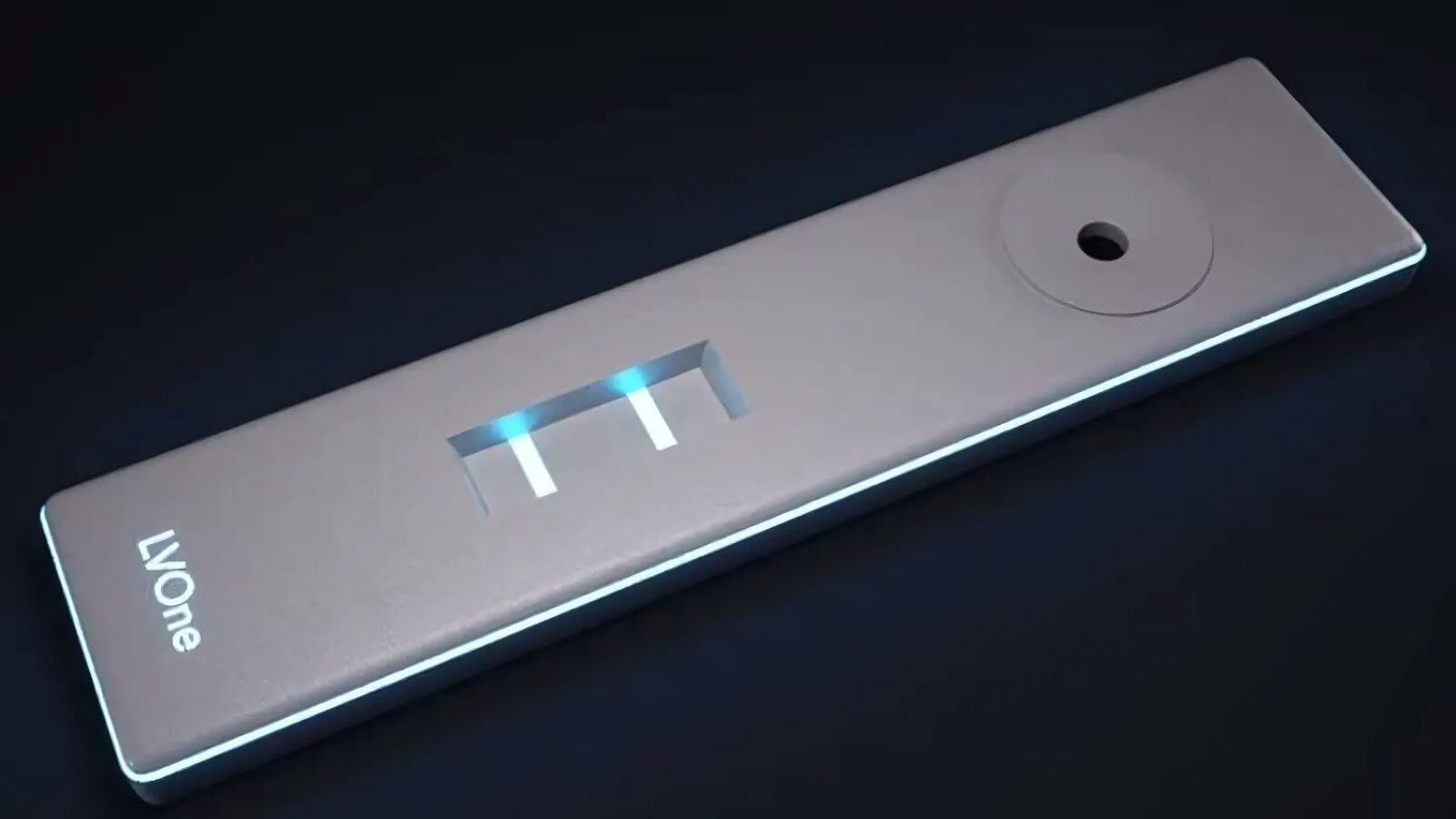
Case study
The journey toward IVDR compliance for the LVOne device
QbD Group helped Upfront Diagnostics gain entry into the MD/IVD industry by supporting them on their path to ISO 13485 certification.